2026-11-14 · Robert Ellis
Steps To Dry Out A Home After Hurricane Related Water Intrusion
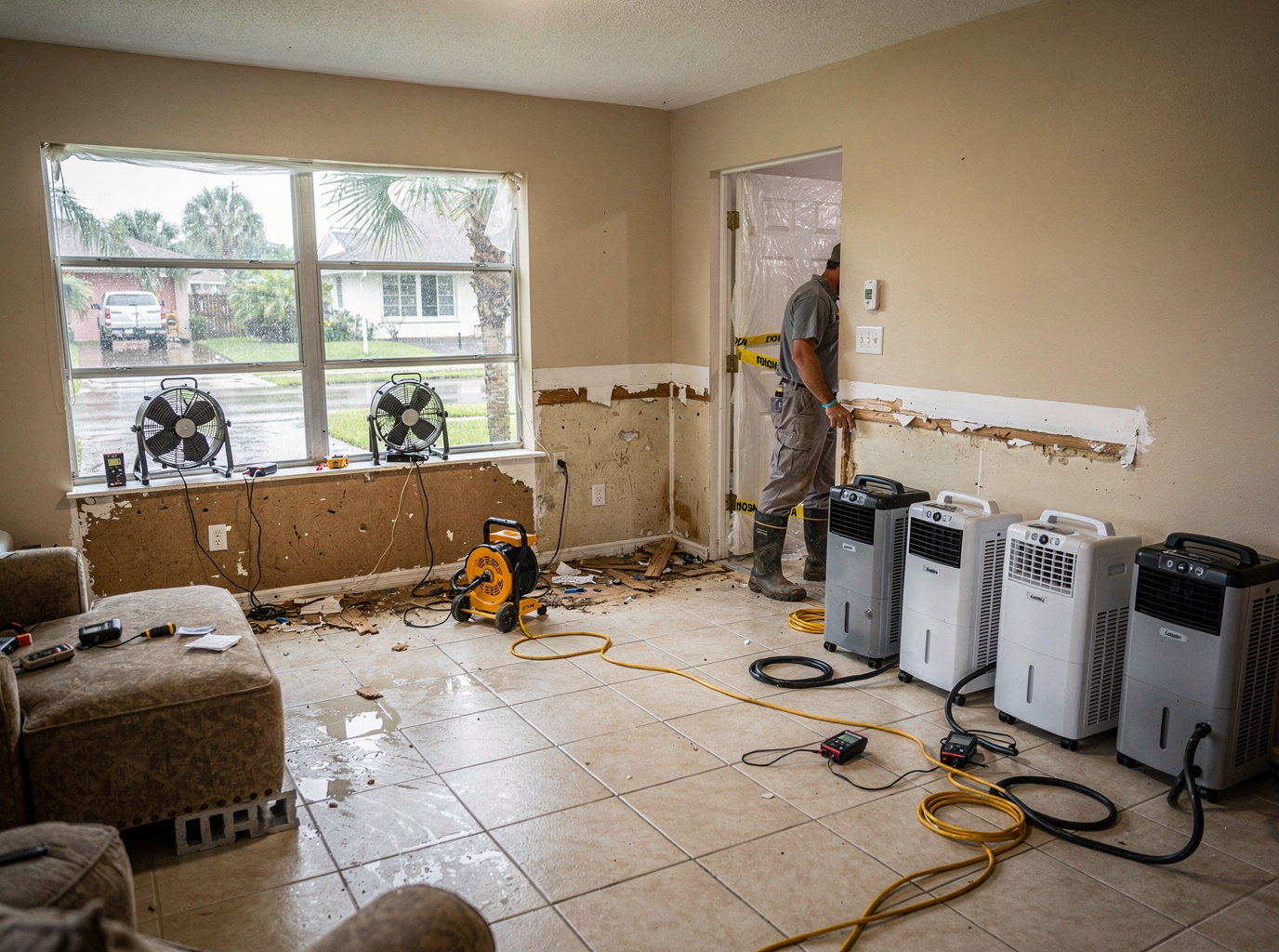
Drying a home after hurricane water intrusion starts with safety evaluation and water removal, typically requiring 5–10 days of active drying in Jacksonville's humid subtropical conditions before moisture levels stabilize. Older wood-frame homes common in Riverside, San Marco, and Avondale absorb water deeply into framing and subfloors, while proximity to the St. Johns River often means sediment-laden floodwater that slows evaporation. Mild winters help but high summer humidity in Duval County can extend timelines if dehumidification is skipped.
Safety and Initial Assessment
Begin every job by shutting off electricity at the main panel and wearing protective gear before entering standing water. In Downtown Jacksonville or Springfield, where many homes predate modern codes, check for compromised floors and hidden voids under stairs or in crawl spaces. Document all affected rooms with photos and moisture readings at multiple heights on walls. Homes near the St. Johns River frequently carry silt that masks deeper saturation, so probe drywall and baseboards at 12-inch intervals. This assessment prevents later surprises when humidity spikes during recovery.
Water Extraction and Removal
Remove standing water first using pumps rated for 50–100 gallons per minute, then extract trapped moisture from carpets and padding with truck-mounted units. In Mandarin and Arlington, slab-on-grade homes trap water under tile or hardwood, requiring perimeter drilling to reach sub-slab cavities. Focus on furniture and belongings within 48 hours to limit secondary damage. Properties in Orange Park or Atlantic Beach often need repeated extraction passes because flat terrain allows water to pool against foundations for days. Consistent removal reduces the load on later drying equipment.
Structural Drying and Dehumidification
Deploy commercial air movers and dehumidifiers to lower indoor humidity below 50 percent within the first 48 hours. Jacksonville's hot summers push ambient moisture high, so place units strategically around load-bearing walls in older Riverside homes where plaster and lathe retain water longer than modern drywall. Monitor with moisture meters daily; aim for wood moisture content under 12 percent before closing cavities. Link this process to Water Damage Restoration techniques that account for local flood patterns. In neighborhoods bordering the St. Johns River, sediment can clog equipment filters faster, requiring more frequent maintenance.
Preventing Mold and Hidden Moisture
After hurricane intrusion, inspect for hidden pockets in insulation, behind cabinets, and under vanities common in San Marco bungalows. Run dehumidifiers continuously for at least 72 hours past visible dryness because Duval County's mild winters still allow overnight condensation. Check How To Spot Hidden Moisture After Summer Storms In Jacksonville for meter placement tips specific to local construction. Remove and discard porous materials like saturated drywall below the flood line to stop mold colonies that thrive in remaining humidity. This step protects long-term air quality in homes throughout Jacksonville.
Final Verification and Restoration
Confirm drying with both moisture meters and thermal imaging before any reconstruction. Test multiple points on every wall and floor in homes near Neptune Beach or Orange Park where groundwater tables sit close to the surface. Reinstall only after readings stay stable for 48 hours. Review What Jacksonville Homeowners Should Know About Flooding Near The St Johns River for elevation-specific advice that applies after major storms. Proper verification prevents callbacks when humidity returns during the next season.