2026-11-14 · Robert Ellis
How To Spot Hidden Moisture After Summer Storms In Jacksonville
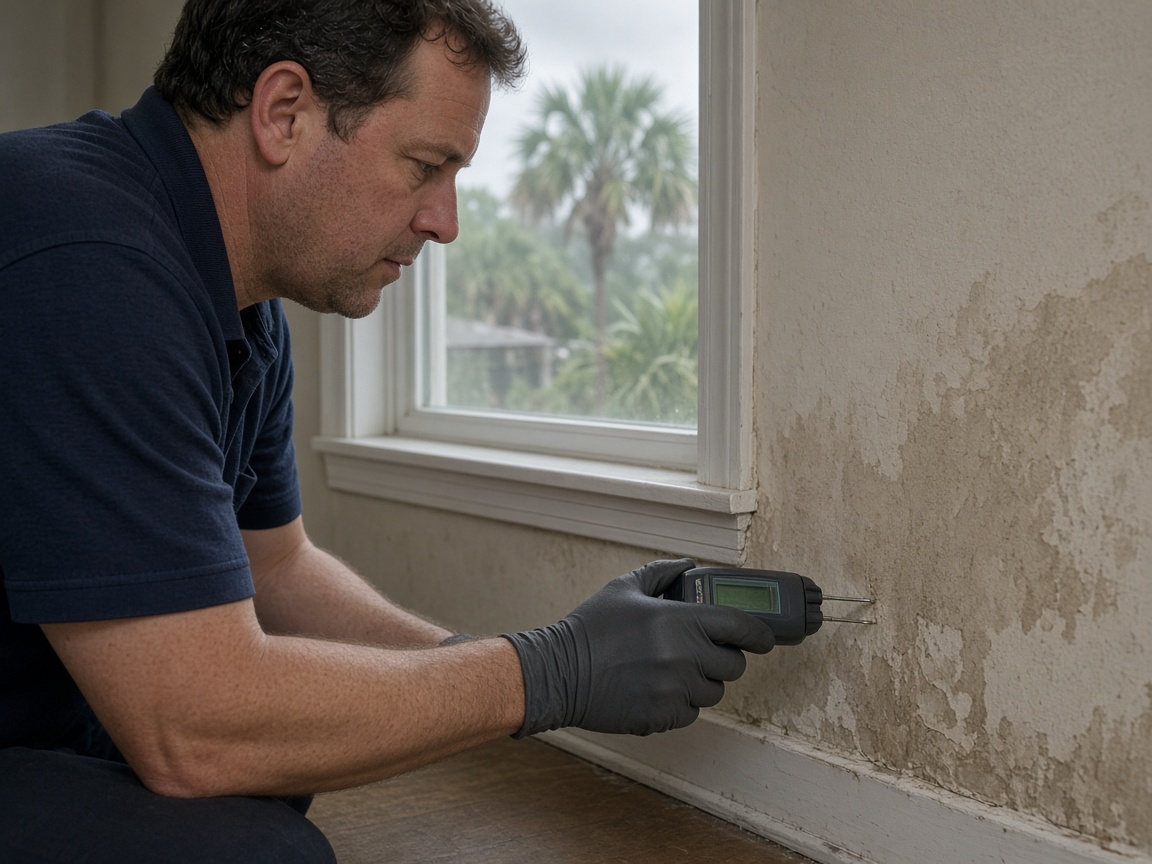
After summer storms hit Jacksonville, check for hidden moisture within 24–48 hours by examining walls, ceilings, and floors with a moisture meter reading above 15% in drywall. Homes in Riverside and Avondale built before 1960 absorb water through plaster and lathe that stays damp longer than modern materials due to the area's high humidity and frequent heavy rainfall.
Inspecting Walls and Ceilings After Storms
Start at the top floor and work down because water travels through ceilings before showing on lower levels. In Springfield and Downtown Jacksonville, look for sagging drywall or bubbling paint near light fixtures where storm runoff pools on flat roofs common to 1920s–1950s housing stock. Press firmly along baseboards with a gloved hand; soft spots indicate saturation even when surfaces feel dry to the touch. Use a pin-type moisture meter on multiple points 12–18 inches apart to map wet zones rather than relying on visual cues alone. Older homes near the Cummer Museum often have multiple layers of wallpaper that trap moisture against plaster, creating hidden pockets that require targeted drying equipment.
Checking Floors and Subfloors in Local Homes
Lift a corner of carpet or remove a vent cover to test hardwood and subflooring in Mandarin and Arlington neighborhoods where slab foundations meet the high water table. Warped boards or musty odors signal trapped water that summer storms push under baseboards through poor grading around 30–50 year old homes. In areas with crawl spaces, shine a flashlight under the house to spot standing water or damp soil that evaporates slowly in Jacksonville's humid subtropical climate. Measure moisture in plywood subfloors at 20% or higher and mark those sections for professional extraction before mold sets in within 48–72 hours.
Testing Attics and Insulation Near the St. Johns River
Climb into the attic after storms to check insulation batts and roof decking, especially in San Marco homes with older shingle roofs that leak around flashing. Damp fiberglass insulation loses R-value quickly and holds water against rafters for weeks in mild winter conditions that follow summer rains. Run your hand along the underside of the roof deck for cool, moist spots that indicate hidden intrusion from wind-driven rain common along the St. Johns River. What Jacksonville Homeowners Should Know About Flooding Near The St Johns River explains how river levels affect nearby properties after prolonged downpours.
Using Tools and When to Call for Water Damage Restoration
A thermal camera reveals temperature differences of 3–5 degrees Fahrenheit that point to wet areas behind drywall in Avondale and Springfield. Combine meter readings with visual checks around windows and exterior doors where sealant fails after years of exposure. For properties in Atlantic Beach or Neptune Beach, salt air accelerates corrosion on metal components, making hidden moisture harder to detect without infrared tools. Water Damage Restoration covers the drying process using industrial dehumidifiers sized for 1,500–2,500 square foot homes typical in these neighborhoods. Schedule checks during Mon–Fri 8am–6pm or Sat 9am–2pm at 1716 Harper St if readings stay elevated after 72 hours.
Common Jacksonville Problem Areas and Next Steps
Focus on bathrooms and laundry rooms in Orange Park and Mandarin where plumbing penetrations meet exterior walls exposed to driving rain. Document all meter readings with photos and timestamps before any cleanup begins. Persistent readings above 18% in multiple rooms signal the need for extraction services rather than DIY fans that cannot pull moisture from deep within wall cavities. Steps To Dry Out A Home After Hurricane Related Water Intrusion provides additional drying timelines tailored to Duval County conditions.