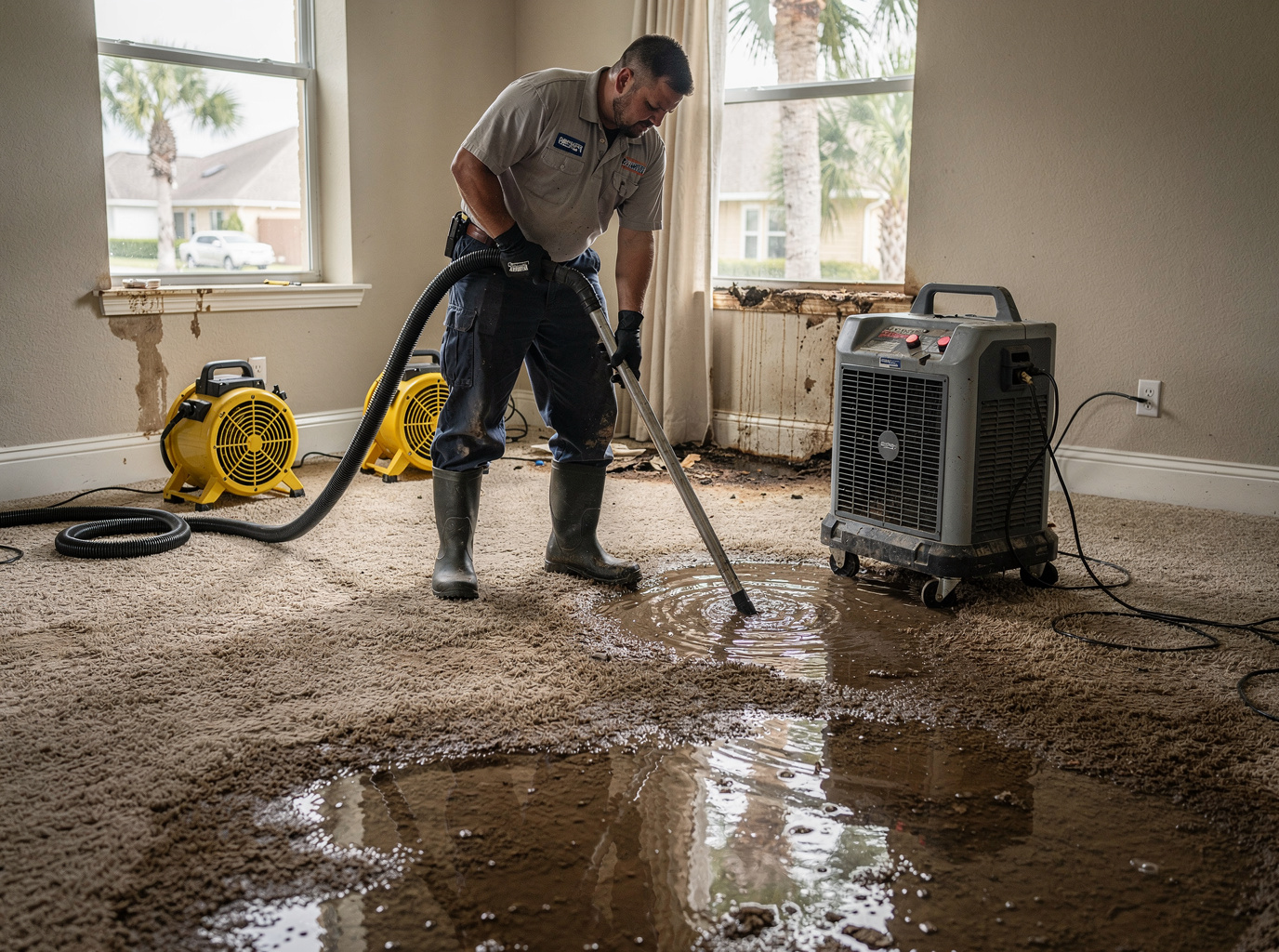
Jacksonville's humid subtropical weather brings heavy summer rains and occasional tropical systems that push water into older frame houses common in Riverside and Springfield. Plaster walls and crawl spaces in these pre-1950 homes trap moisture against the soil, so crews must pull baseboards early and run commercial dehumidifiers for days rather than hours. Homes near the St. Johns River or in low-lying parts of Mandarin often see repeated intrusion through slab edges, requiring moisture meters on every visit to catch hidden pockets before mold sets in.
Downtown high-rises and Arlington townhomes present different challenges with shared walls and HVAC systems that spread humidity quickly across units. Technicians map affected zones with thermal cameras, then isolate airflow to prevent cross-contamination into unaffected rooms. After extraction, crews focus on drying insulation and subfloors because mild winters do not provide enough natural evaporation to stop secondary damage.
Cleanup near Atlantic Beach or Neptune Beach must also address salt air corrosion on metal fasteners and electrical boxes once water has entered. Technicians remove saturated drywall up to the flood line, bag debris for disposal, and treat remaining surfaces with antimicrobial solutions suited to coastal humidity levels. Final verification uses pin meters and infrared scans before any reconstruction begins.
Technician insight
In Jacksonville, the thing that catches most people out with Water Damage Cleanup is how fast mold appears in the humid subtropical summers once water sits behind plaster in 1920s Riverside or Springfield homes. The St. Johns River and low spots in Mandarin keep soil moisture high, so even a small leak can push readings above 20 percent within 48 hours if crews skip daily meter checks.
Hidden moisture behind kitchen cabinets in Avondale
A slow dishwasher leak had soaked the subfloor and lower cabinets in a 1940s Avondale house. Meters showed elevated readings extending two feet into the dining room wall. Crews removed the toe-kicks, extracted water, and ran drying equipment for four days until readings normalized, preventing mold that often follows river-area humidity.
Water Damage Cleanup Services We Offer
✓Emergency Water Extraction
Removes standing water from living spaces and crawl spaces using truck-mounted pumps sized for Jacksonville storm volumes.
✓Structural Drying Services
Deploys air movers and dehumidifiers in older Riverside and Avondale homes to pull moisture from plaster, hardwood, and subfloors.
✓Mold Remediation After Flooding
Contains and removes mold growth triggered by prolonged humidity in Duval County homes near the St. Johns River.
✓Carpet and Flooring Restoration
Extracts water from carpets and pads then dries or replaces flooring damaged by leaks in San Marco and Mandarin properties.
✓Content Cleaning and Restoration
Cleans and dries salvageable belongings from affected rooms before returning them to homeowners in Springfield and Arlington.
✓Sewage Cleanup and Disinfection
Handles contaminated water events with proper PPE and EPA-registered disinfectants suited to older Jacksonville plumbing systems.
Water Damage Cleanup Cost in Jacksonville, FL
| Service | Typical Range | What Affects It |
|---|---|---|
| Emergency water extraction | $250–$750 | Depends on gallons removed and access to crawl spaces common in Riverside homes. |
| Full structural drying package | $800–$2,200 | Includes equipment rental and daily monitoring; higher for multi-story homes near the river. |
| Mold remediation add-on | $600–$1,800 | Size of affected area and containment needs in humid summer conditions. |
| Content cleaning | $300–$900 | Number of rooms and type of items; delicate fabrics or electronics increase cost. |
Ranges are typical for Jacksonville, FL and confirmed with an exact written quote before any work starts.
How it works
- 1
Initial Assessment
Technicians inspect the property, locate the water source, and document moisture levels in walls, floors, and ceilings using meters and cameras.
- 2
Water Removal
Standing water is extracted with pumps and wands, then debris is removed to prevent further saturation in crawl spaces or basements.
- 3
Drying And Dehumidification
Air movers and dehumidifiers run continuously while crews monitor daily moisture readings until materials reach acceptable dryness.
- 4
Sanitizing And Final Verification
Affected surfaces receive antimicrobial treatment, followed by a final scan to confirm no hidden moisture remains before reconstruction.
Pricing
Pricing varies by water volume, affected square footage, and whether hidden moisture exists behind walls or under floors in older Jacksonville homes.