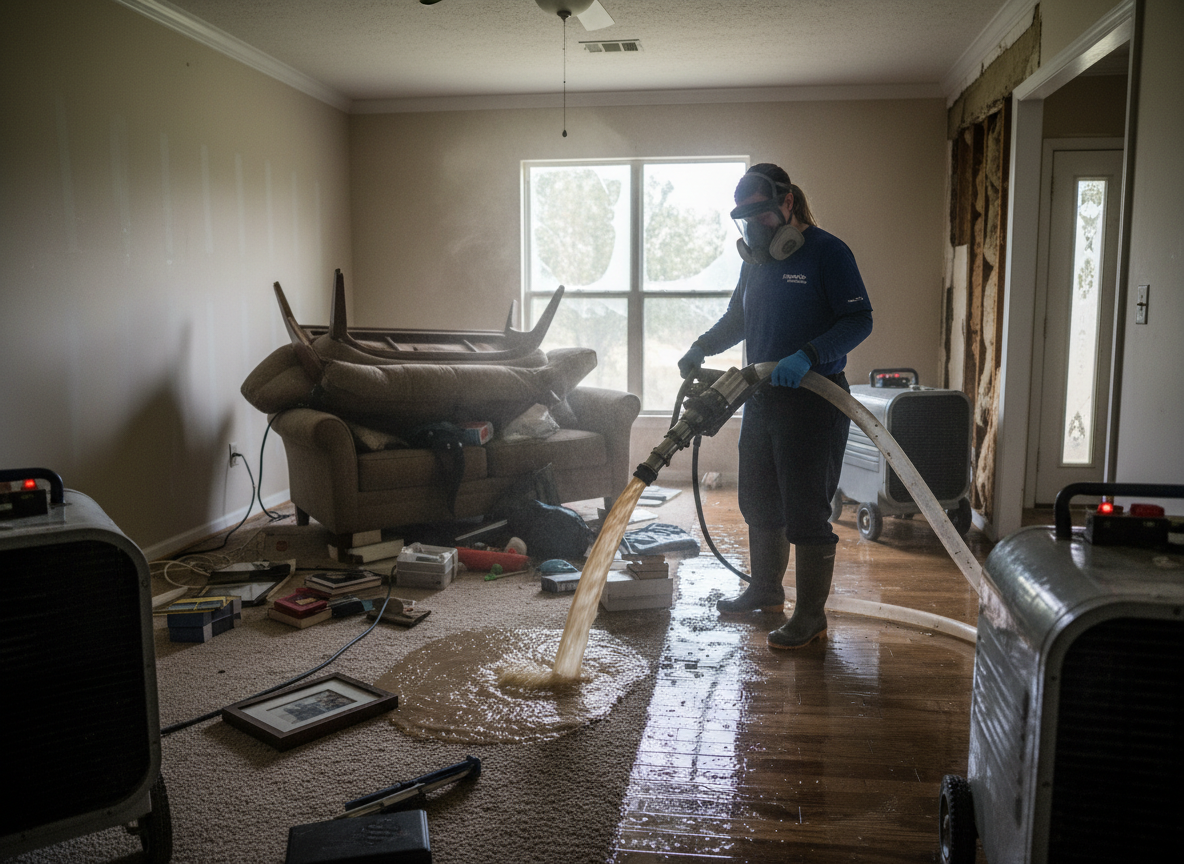
Jacksonville's location along the St. Johns River and low-lying terrain in neighborhoods like Riverside and Springfield means floodwater often enters crawl spaces and first floors of 1920s-1950s wood-frame homes. These older structures absorb water into plaster walls and heart-pine floors faster than newer builds, requiring immediate extraction to prevent hidden saturation behind baseboards. After river or stormwater events, crews must account for tidal influence that can re-wet areas hours later.
The area's humid subtropical climate keeps relative humidity above 70 percent for weeks after a flood, so standard fans alone fail to dry wall cavities in Mandarin or Arlington slab homes. Technicians use moisture meters on concrete and lath to locate trapped water that later fuels mold growth under vinyl flooring or behind kitchen cabinets. Failure to address this leads to repeated callbacks once summer heat returns.
Duval County properties near the Cummer Museum or Avondale often sit on mounded lots that direct runoff toward foundations during nor'easters. Restoration includes removing saturated insulation from pier-and-beam homes while protecting original hardwood that can cup if dried too quickly. Local crews also manage secondary sewage contamination common when storm drains back up into Downtown basements.
Post-flood work in Jacksonville requires careful sequencing because mild winters allow mold to remain active year-round unlike colder northern markets. Teams document hidden damage in attics and under porches before reconstruction to satisfy insurance adjusters familiar with repeated riverine claims in San Marco.
Technician insight
In Jacksonville the thing that catches most people out with Flood Damage Restoration is how the St. Johns River and high water table keep feeding moisture back into crawl spaces for days after the rain stops, especially in older Riverside and San Marco homes where humidity never drops enough for wood to dry on its own.
Springfield Home After Nor'easter
Heavy rain pushed water through the foundation vents of a 1930s wood-frame house near the Cummer Museum. Extraction crews found saturated insulation and floor joists still wet three days later due to tidal backflow. Targeted drying and selective material removal restored the structure without full floor replacement.
Flood Damage Restoration Services We Offer
✓St. Johns River Flood Extraction
Rapid removal of river and tidal floodwater from first floors and crawl spaces in Riverside and Springfield homes before saturation spreads to subfloors.
✓Crawl Space Drying After Flooding
Targeted dehumidification and insulation removal in pier-and-beam homes common throughout Avondale and Mandarin to stop hidden mold growth.
✓Historic Home Flood Restoration
Gentle drying and material salvage for 1920s wood-frame and plaster structures in San Marco and Downtown Jacksonville to preserve original floors and trim.
✓Storm Drain Backup Cleanup
Contaminated water removal and disinfection following sewage intrusion from overwhelmed drains in Arlington and near EverBank Field during heavy rains.
✓Content Pack-Out and Cleaning
Removal, cleaning, and storage of furniture and belongings from flood-affected rooms in Jacksonville homes to prevent secondary damage during structural drying.
Flood Damage Restoration Cost in Jacksonville, FL
| Service | Typical Range | What Affects It |
|---|---|---|
| Initial Water Extraction | $800–$2500 | Higher in multi-story Riverside homes with finished basements |
| Equipment Drying Rental | $400–$1200 | Varies with duration needed in humid Jacksonville summers |
| Crawl Space Restoration | $600–$1800 | Includes insulation removal in older Avondale and Springfield homes |
| Content Cleaning | $300–$900 | Depends on volume of items affected by contaminated floodwater |
Ranges are typical for Jacksonville, FL and confirmed with an exact written quote before any work starts.
How it works
- 1
On-Site Assessment
Technician inspects affected areas in the specific neighborhood, measures moisture levels in walls and floors, and identifies tidal or drainage factors unique to the property.
- 2
Water Extraction
High-volume pumps and vacuums remove standing water from slabs, crawl spaces, and basements while protecting original materials in older Duval County homes.
- 3
Drying and Dehumidification
Industrial air movers and dehumidifiers run continuously, with daily moisture checks to counter Jacksonville's persistent humidity until readings return to normal.
- 4
Sanitization and Restoration
Antimicrobial treatment followed by removal of damaged drywall or flooring and replacement with code-compliant materials suited to local flood zones.
Pricing
Upfront quotes issued after inspection; final cost depends on water depth, square footage, and whether contents require pack-out.