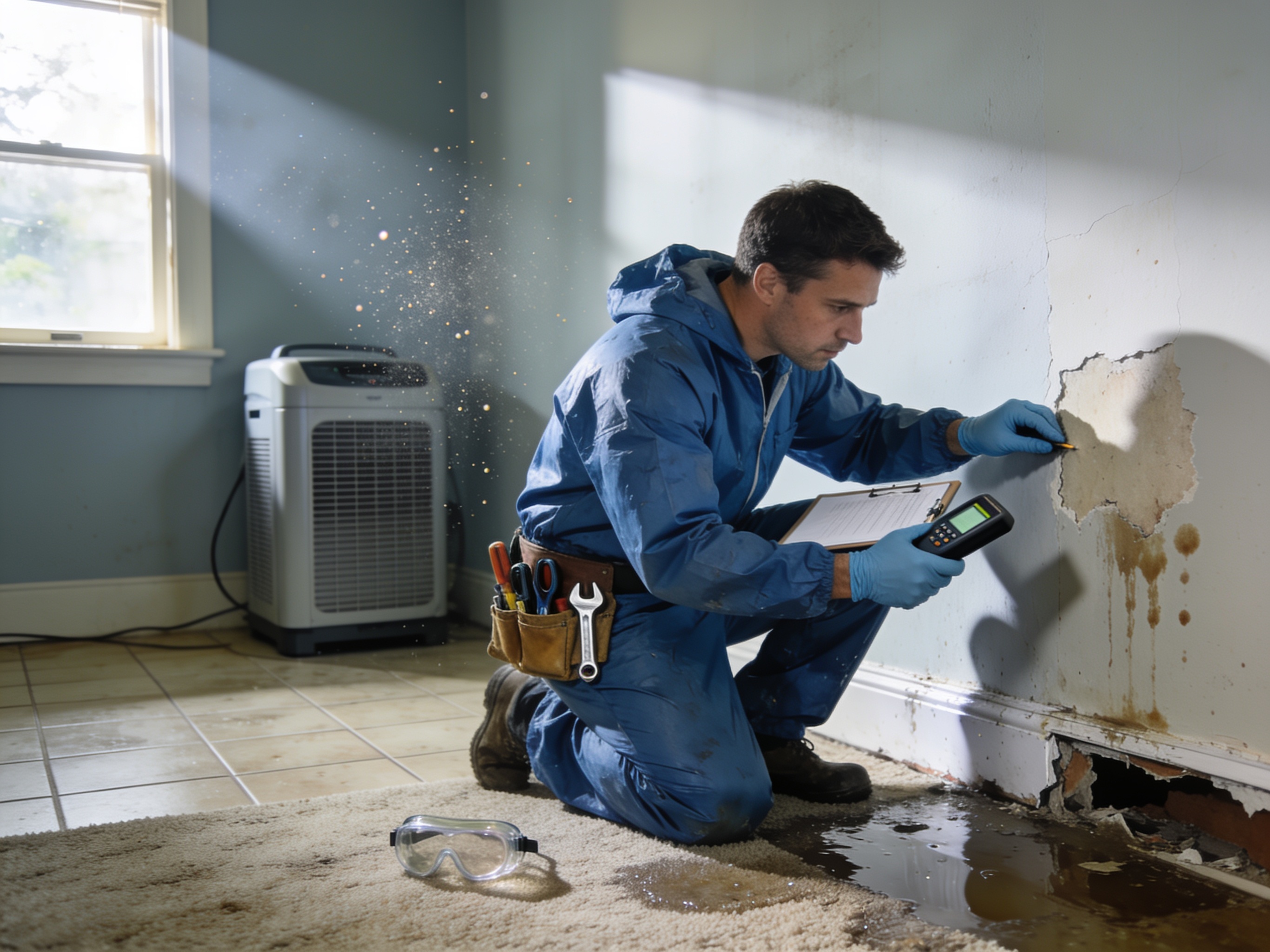
Jacksonville's humid subtropical climate keeps relative humidity high year-round, so even small leaks in Riverside or Avondale homes built before 1950 quickly turn into widespread moisture issues behind plaster and in crawl spaces. The St. Johns River and tidal surges push water into low-lying lots in Downtown and Springfield, where slab-on-grade foundations and balloon-framed walls trap moisture that standard fans cannot pull out. Technicians must map hidden saturation with moisture meters because visible drywall damage often understates how far water has wicked into subfloors and insulation.
Mild winters do not reduce risk; hurricane season and afternoon thunderstorms deliver sudden volume that overwhelms older gutters and downspouts common on San Marco and Mandarin properties. Once water enters, the county's sandy soils drain slowly in flat terrain, leaving saturated ground against foundation walls for days. Restoration crews therefore prioritize negative-pressure drying and antimicrobial application in these conditions to prevent the rapid mold growth that Duval County's warm temperatures accelerate within 48 hours.
Code compliance in Jacksonville requires proper disposal of saturated porous materials and documentation for insurance adjusters, especially when work occurs near landmarks like the Cummer Museum or Kingsley Plantation where historic districts add review layers. Crews also coordinate with nearby cities such as Orange Park and Atlantic Beach when water crosses municipal lines, ensuring drying equipment placement accounts for prevailing winds off the river that can reintroduce moisture.
Technician insight
In Jacksonville the thing that catches most people out with Residential Water Damage Restoration is how the St. Johns River keeps soil moisture high against older Riverside and Avondale foundations long after rain stops, so drying times stretch beyond what homeowners expect from milder winter weather.
Riverside Bungalow After Heavy Rain
Water entered through a failed downspout and wicked under the 1940s hardwood floors. Crews extracted water from the crawl space, ran dehumidifiers for six days to counter river humidity, then replaced saturated subfloor sections. The home dried fully without mold and passed final moisture checks.
Residential Water Damage Restoration Services We Offer
✓Emergency Water Extraction
Removes standing water from floors and carpets in Riverside and Downtown homes before it migrates into wall cavities or subfloors.
✓Structural Drying and Dehumidification
Deploys industrial air movers and dehumidifiers calibrated for Jacksonville humidity to dry framing and insulation without warping.
✓Mold Prevention After Flooding
Applies EPA-registered antimicrobials to affected areas in older Avondale and Springfield homes where humidity speeds spore growth.
✓Crawl Space Water Removal
Extracts water and installs vapor barriers in homes near the St. Johns River where tidal influence keeps soil saturated.
✓Content Drying and Pack-Out
Moves and dries furniture, rugs, and documents from San Marco and Mandarin residences to prevent secondary damage.
Residential Water Damage Restoration Cost in Jacksonville, FL
| Service | Typical Range | What Affects It |
|---|---|---|
| Initial Assessment And Documentation | Free | Includes moisture readings and insurance photos for any Jacksonville address. |
| Water Extraction | $600–$1,800 | Varies with depth of standing water and access in older homes. |
| Full Structural Drying | $1,200–$3,500 | Depends on number of rooms and duration needed in high-humidity conditions. |
| Crawl Space Restoration | $800–$2,200 | Includes vapor barrier install when river-adjacent lots stay saturated. |
Ranges are typical for Jacksonville, FL and confirmed with an exact written quote before any work starts.
How it works
- 1
On-Site Assessment
Technicians inspect all affected rooms, use moisture meters on walls and floors, and document conditions for insurance in neighborhoods like Arlington and Mandarin.
- 2
Water Extraction
Portable pumps and vacuums remove standing water from slabs and carpets before it reaches wood framing common in pre-1960 Jacksonville homes.
- 3
Drying And Monitoring
Equipment runs continuously with daily moisture readings until levels match unaffected areas, accounting for river humidity that slows the process.
- 4
Final Restoration
Replace damaged drywall, flooring, and trim, then verify no residual moisture remains before returning contents.
Pricing
Upfront quotes after inspection; final cost depends on water volume, affected square footage, and whether contents require off-site drying.