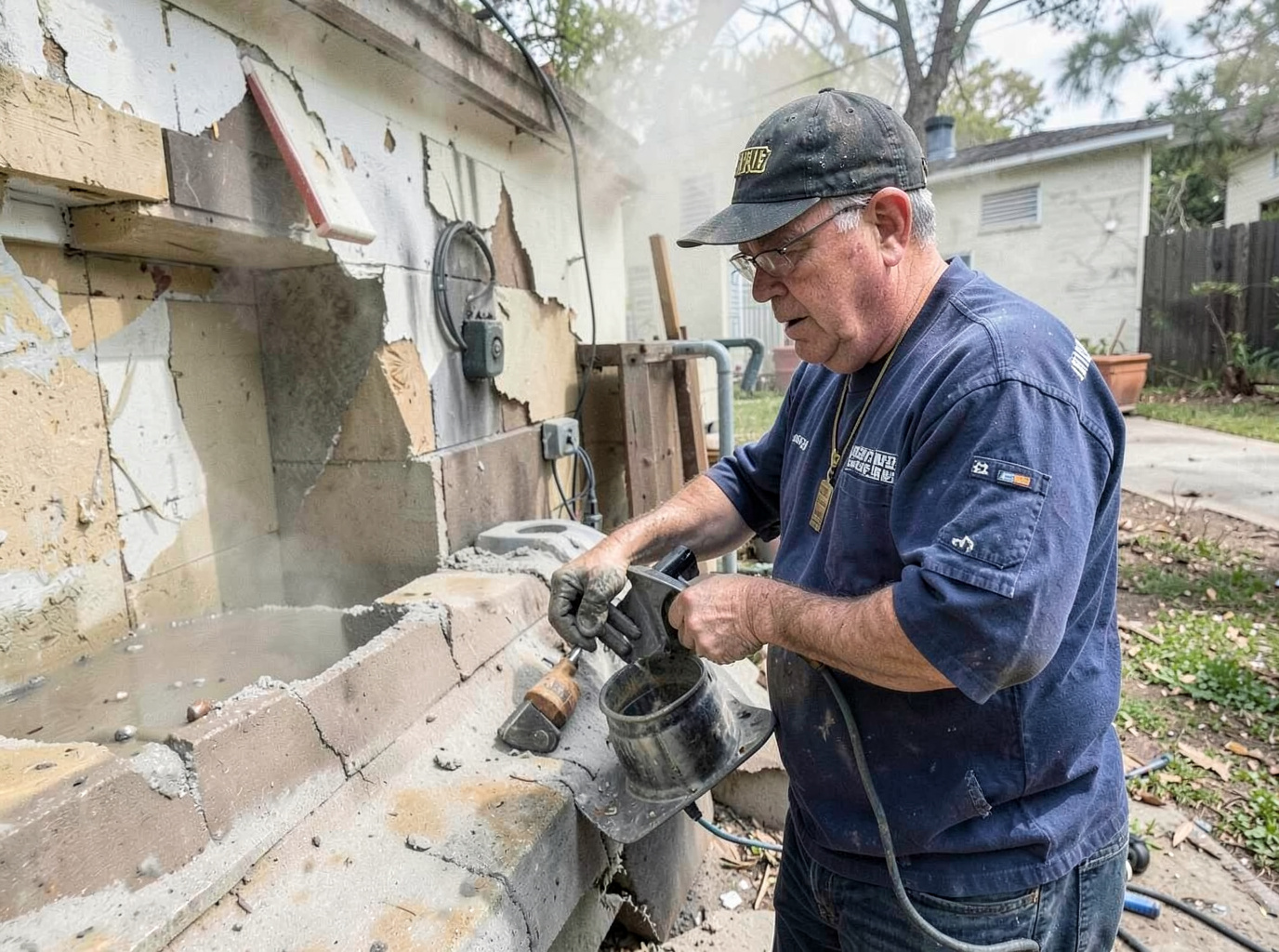
St. Augustine properties face water intrusion from nor'easters and summer thunderstorms that push water against coquina foundations and older frame construction along streets like St. George and Avenida Menendez. Crews dispatched from our Harper Street location reach these sites via A1A or US 1, where narrow historic lots and limited parking often require smaller extraction equipment and staged drying setups to protect original materials.
High humidity in the area speeds mold growth inside masonry walls once moisture enters, especially in Lincolnville and near the Matanzas River. Restoration work here focuses on targeted dehumidification and moisture mapping to avoid disturbing protected structures while addressing saturation from tidal surges or roof leaks common in the older housing stock.
Access routes from Jacksonville can add response time during peak tourist seasons when downtown traffic backs up, so early detection calls from St. Augustine homeowners help us stage equipment ahead of larger storms.
Around 6. St. Augustine
We regularly work near:
- 📍Castillo de San Marcos
- 📍St. George Street
- 📍Lincolnville Historic District
- 📍Flagler College
- 📍Anastasia State Park
- 📍St. Augustine Lighthouse
Water Damage Repair in 6. St. Augustine — Local Notes
- •Many St. Augustine homes built before 1920 use coquina and tabby construction that absorbs water differently than modern block, requiring slower drying rates to prevent cracking.
- •Narrow streets and on-street parking in the historic district limit truck access, so portable pumps and air movers are often carried in for interior work.
- •Tidal influence from the Matanzas River can reintroduce moisture after initial extraction, making follow-up visits necessary on properties near the waterfront.
- •Summer humidity levels above 80 percent mean dehumidifiers must run longer cycles on jobs near Anastasia Island to reach safe moisture readings.